Energy · Trophy
OCAP
A disused oil pipe carries the refinery's CO2 to greenhouses
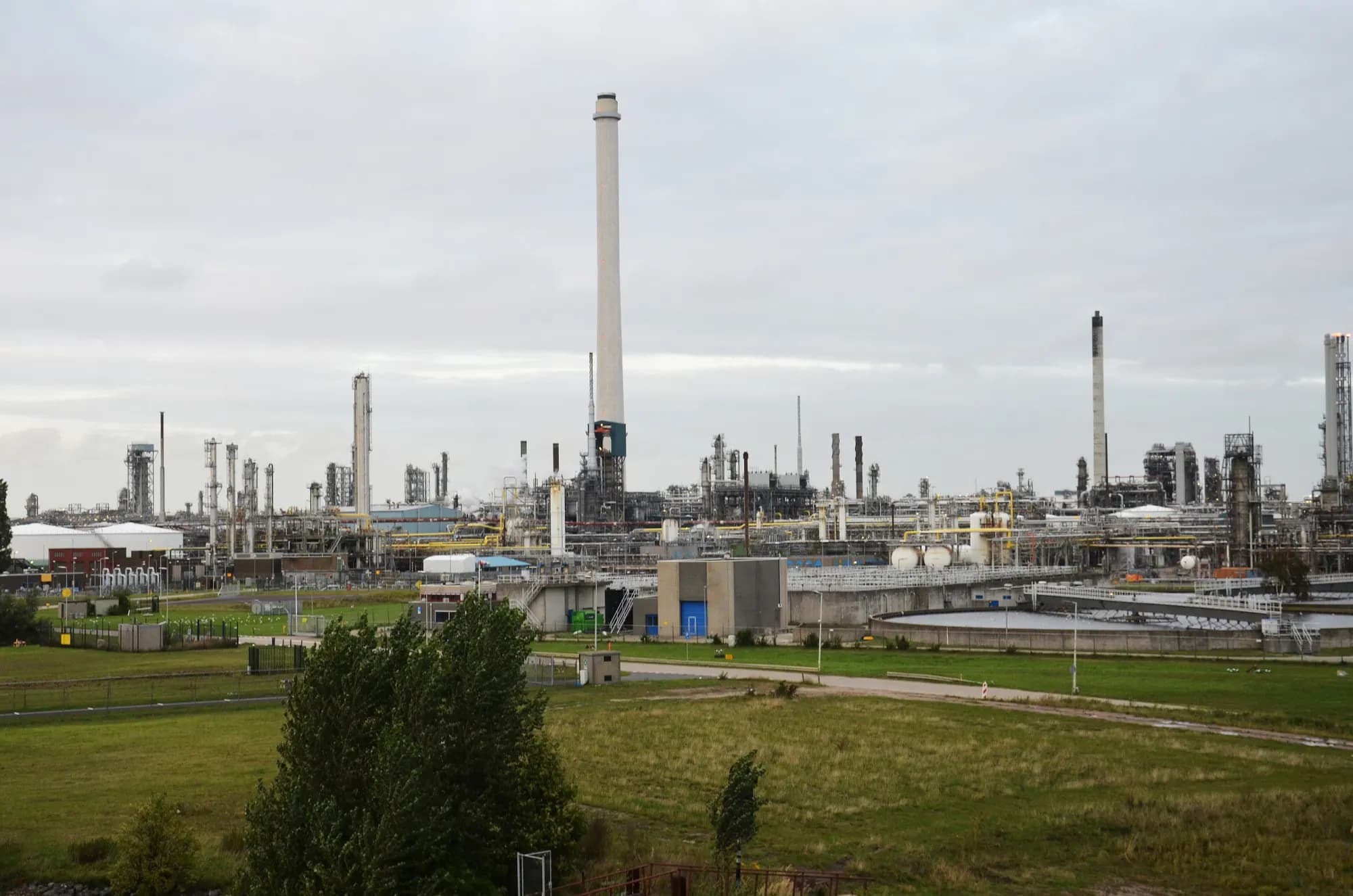
~300,000 tof pure CO2 a year delivered to greenhouses
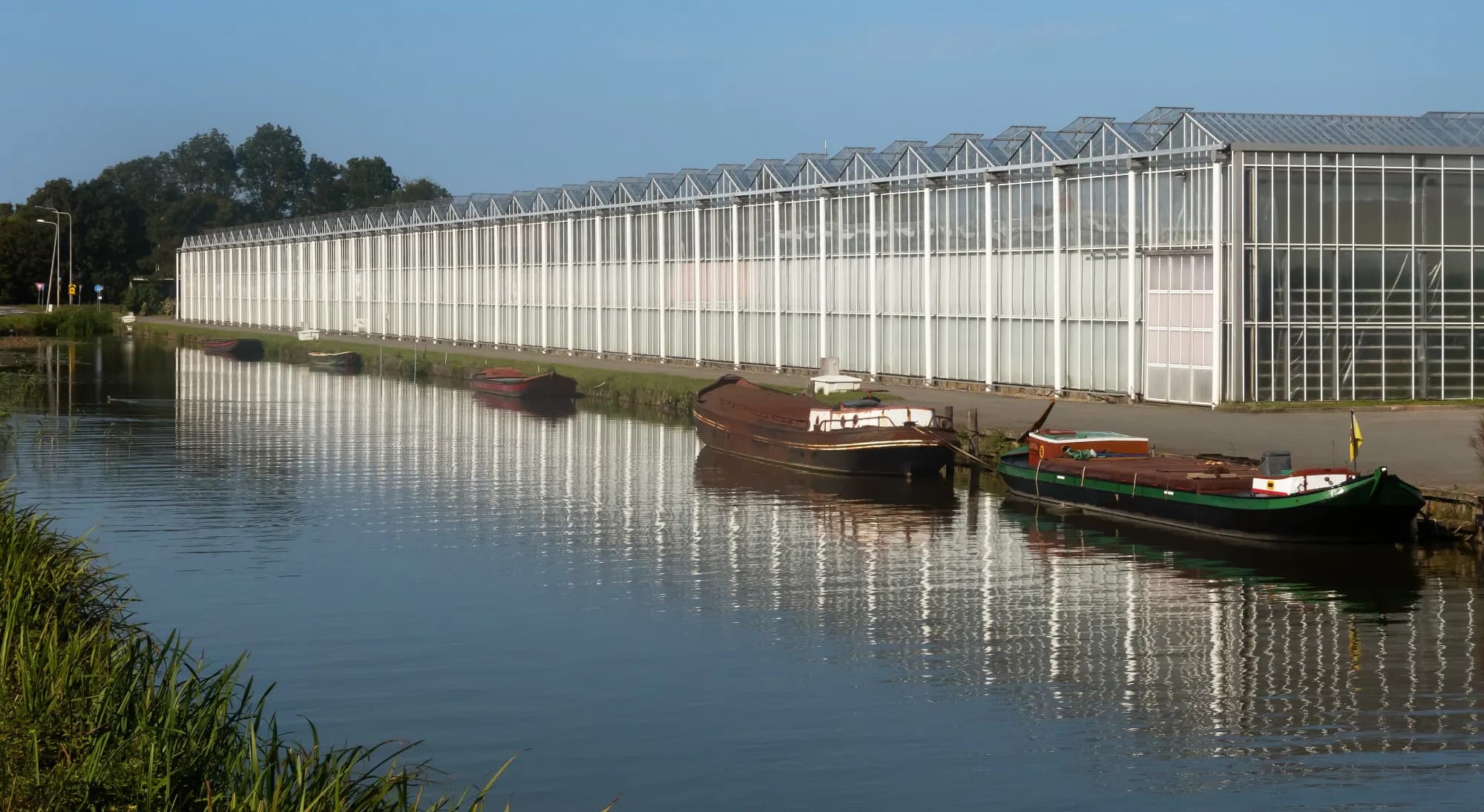
In the port of Rotterdam, a refinery makes hydrogen, and the process leaves behind a stream of almost pure CO2: an emission, a cost, a problem. Forty kilometres away, thousands of greenhouses grow tomatoes and peppers, and tomatoes grow faster in air enriched with CO2. So much faster that growers used to run their gas burners in high summer, purely to make the gas the refinery was throwing away.
For years, one silo paid to get rid of the exact molecule the other silo was paying to produce.
The impossible part was solved cheaply. Pipelines cost fortunes, but a disused oil pipeline already ran from Rotterdam to Amsterdam. Since 2005 that recycled pipe has delivered a few hundred thousand tonnes of pure CO2 a year, later joined by a bio-ethanol plant as a second source, to more than six hundred greenhouse businesses. The growers stopped summer-burning gas; the refinery's waste became a product. A piece of waste was reused to transport waste, which is silo-breaking squared.
Run the method over it
A third party made it work. A gas company owns the pipe, signs the contracts and carries the operation. Six hundred growers cannot each negotiate with a refinery; a refinery cannot run an agricultural sales desk. The neutral broker absorbed the transaction costs.
The order mattered too. OCAP contracted the greenhouses before refurbishing the pipeline. And before betting their crops, the growers waited for a second source, because a single supply can fail. Redundancy turned an interesting pipe into an industry.
Sources
- OCAP (Organic Carbon dioxide for Assimilation of Plants): CO2 from Shell Pernis via a reused 83-km Rotterdam–Amsterdam oil pipeline; first delivery 2005; second source Alco Energy from 2011; ~300,000 t/yr to 600+ greenhouse customers
- Linde Gas: The gas company behind OCAP
What's your version of this?
Somewhere in your organisation, a energy leak is waiting for its address. Start with the scan question.