Trash · Trophy
Kalundborg
Fifty years of handshakes in a small Danish town
€24Ma year in bottom-line savings, shared across the partners
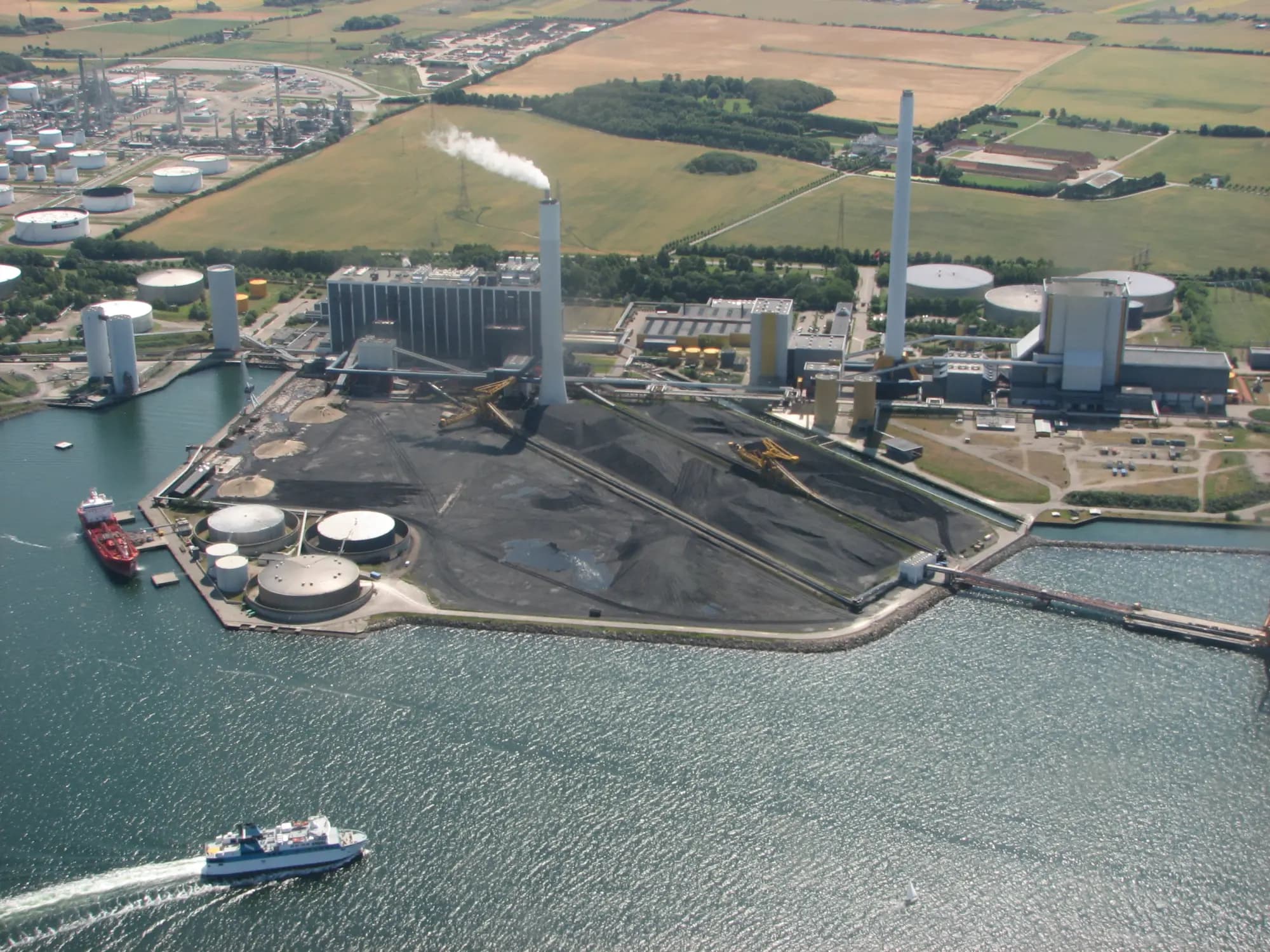
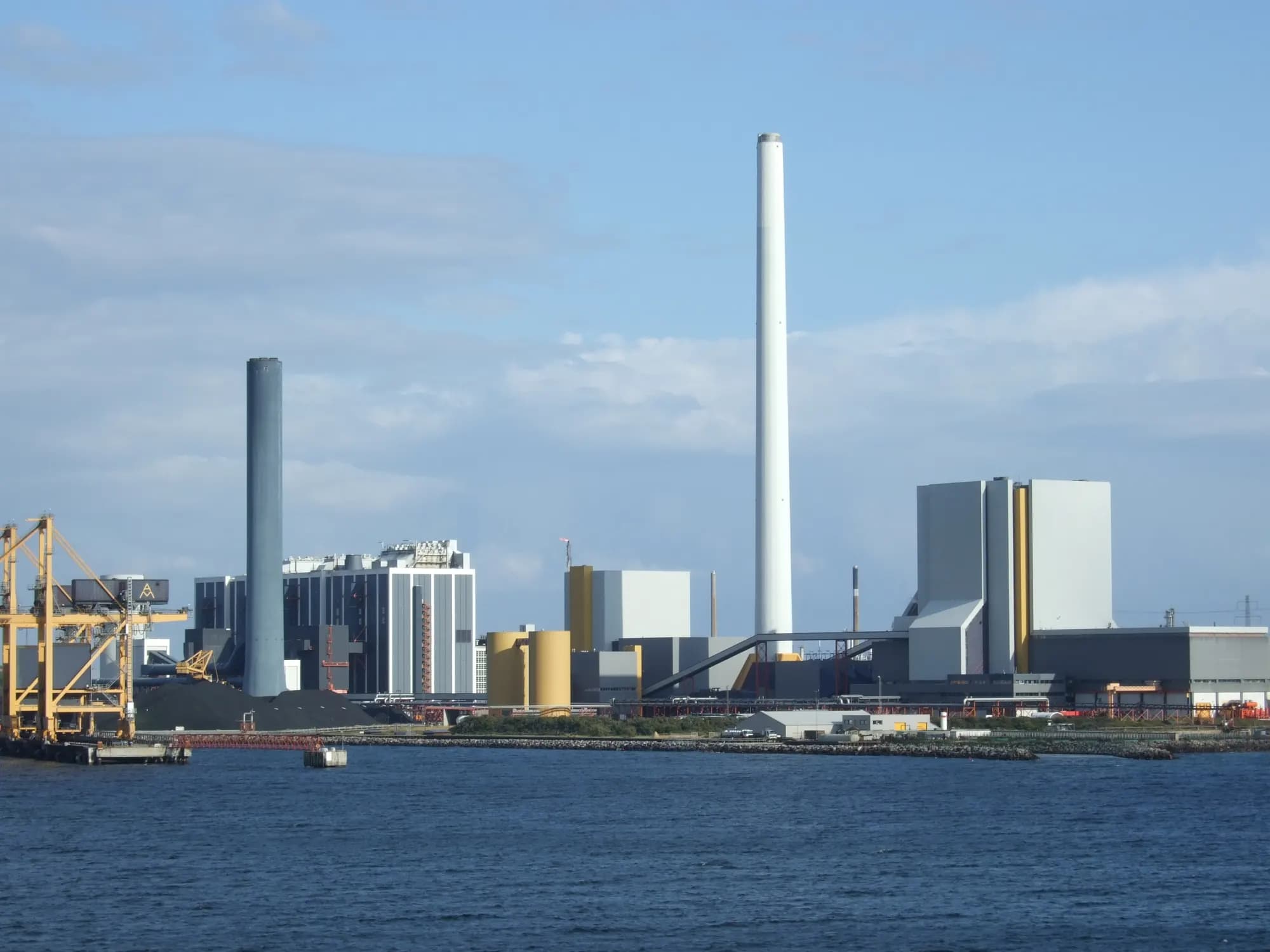
Kalundborg is a small Danish industrial town of sixteen thousand people, two hours west of Copenhagen. It has a refinery, a power station, the world's largest insulin factory, a plasterboard plant, and the municipality itself.
Around 1961, the refinery needed water and the town had a lake; someone proposed a pipeline. In 1972 the first real waste deal followed: the refinery's excess gas, instead of being flared, went next door to the plasterboard factory as fuel. After that, steam went from the power station to the refinery and the pharma plant, and warm cooling water to a fish farm. Gypsum from scrubbing the power station's flue gas went to the plasterboard plant as raw material. Yeast slurry from insulin production went to local farmers as pig feed. Link by link, handshake by handshake.
Today seventeen partners trade more than twenty exchange streams. Together they avoid 586,000 tonnes of CO2 a year and share about €24 million a year in bottom-line savings.
Run the method over it
The legend hides three practical lessons.
First, there was no master plan. Every link was a bilateral deal that made money for both ends. If you wait for the grand ecosystem design, you will wait forever. Close one two-party deal that pays, and the next one gets easier.
Second, proximity did the heavy lifting. Steam, gypsum and warm water are cheap and heavy. They can cross a fence, but they cannot cross a country.
Third, and least told, it took time. Trust is built at the speed of kept promises.
Sources
- Kalundborg Symbiosis: 586,000 t CO2/yr avoided, 4M m³ groundwater/yr saved, 62,000 t materials/yr recycled, ~€24M/yr partner savings plus ~€14M/yr socio-economic benefit; 17 partners, 20–30 exchange streams
What's your version of this?
Somewhere in your organisation, a trash leak is waiting for its address. Start with the scan question.